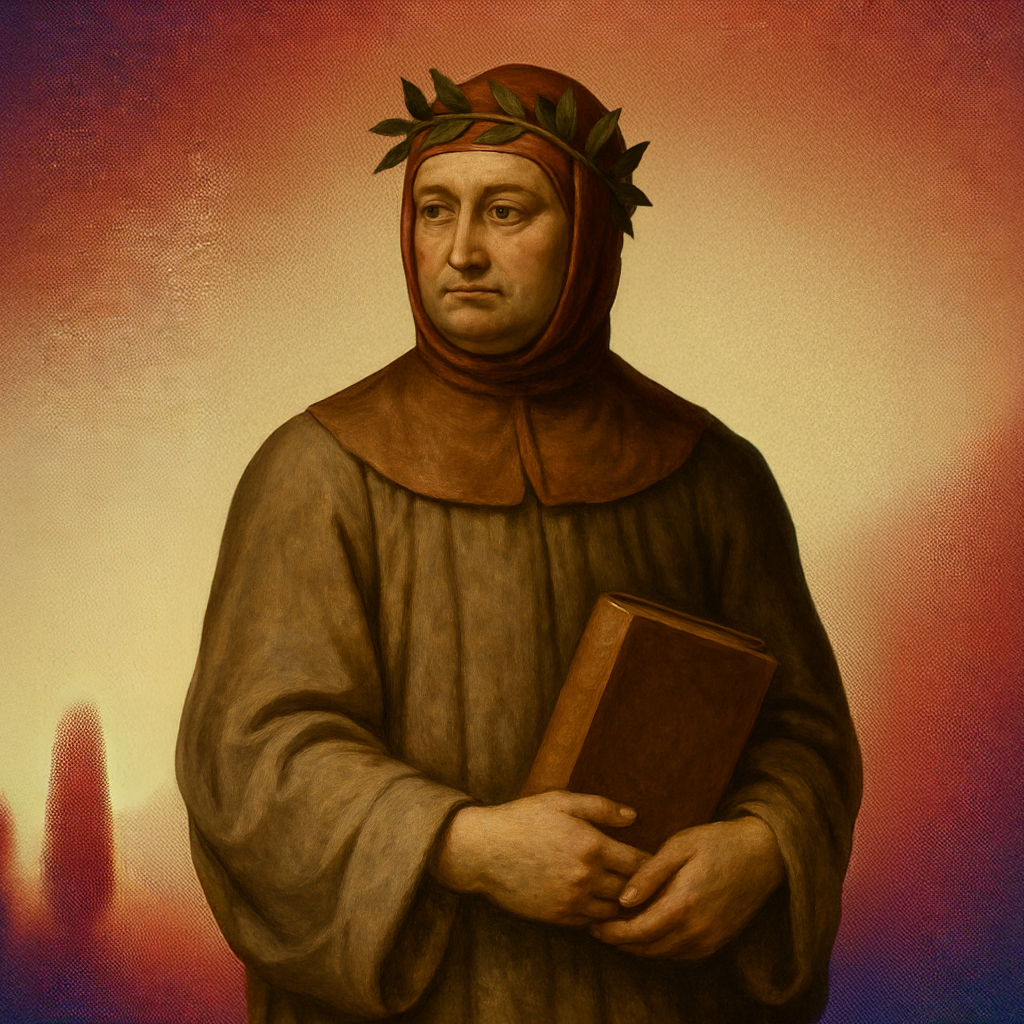
Francesco Petrarca

Francesco Petrarca

Long before self-reflection became trendy, Francesco Petrarca—better known as Petrarch—was writing sonnets and soul-searching like his life depended on it. Born in 1304 in Italy, Petrarch straddled two worlds: the fading Middle Ages and the early stirrings of the Renaissance. A poet, scholar, and obsessive letter-writer, he was the guy who dusted off forgotten Latin manuscripts and made loving your inner life intellectually respectable again. While others were chasing dogma, Petrarch was chasing meaning—through beauty, solitude, and ancient Roman texts. He’s often called the “Father of Humanism,” and for good reason: he put human experience, emotion, and virtue back at the center of thought.
What Can He Teach Me?

Petrarch wasn’t just a poet in love with a woman named Laura—he was a thinker in love with the idea of living well. His insights still speak to anyone trying to balance intellect, emotion, and a desire to live authentically.
  • Know Thyself—Through Words – Petrarch believed that writing, especially letters and poetry, was a form of self-knowledge. Journaling your thoughts isn’t indulgent—it’s philosophical.
  • Look Back to Move Forward – He revived ancient Roman texts not just to admire them, but to learn how to live. History isn’t dead—it’s a mirror.
  • Feel Deeply, Think Clearly – Petrarch’s poetry doesn’t shy away from longing or sorrow. For him, emotion and intellect weren’t enemies—they were partners in the quest for meaning.
  • Solitude Is a Superpower – In his book De Vita Solitaria, he praises the quiet life of study and reflection. Solitude, properly used, is where the best thinking happens.
  • Be a Bridge – He didn’t reject religion or reason—he tried to integrate both. You don’t have to pick sides between faith and philosophy; they can talk to each other.

Notable Works

Here’s where to start if you want to hear Petrarch in his own voice—whether poetic or philosophical:

  • Il Canzoniere – A moving collection of 366 poems, mostly sonnets, written in Italian. These aren’t just love poems—they’re meditations on time, virtue, desire, and loss.
  • Secretum – A private philosophical dialogue between Petrarch and Saint Augustine, where he wrestles with his own shortcomings and spiritual doubts.
  • De Vita Solitaria – His praise of the contemplative life, arguing that solitude nourishes the soul in a world too loud and fast. (English translations are scattered, but excerpts can be found online.)
  • Letters to Classical Authors – Yes, he literally wrote letters to Cicero, Livy, and Seneca. And no, they didn’t reply—but that didn’t stop Petrarch from imagining a conversation across centuries.

Recent Blogs About Petrarch

Whether you’re torn between reason and feeling, craving solitude, or wondering if your journaling habit counts as philosophy, it might be time to listen to Petrarch.
    Search
    Loading

    Signing-in 3 seconds...

    Signing-up 3 seconds...