
Michel Foucault
- Home
- Philosophers
- Michel Foucault
Michel Foucault
If there’s one philosopher who peeled back the layers of modern society to expose what’s really going on underneath, it’s Michel Foucault. Born in 1926 in France, Foucault wasn’t your typical academic. He studied philosophy and psychology, lived all over Europe, and spent much of his life exploring how institutions—like prisons, hospitals, and schools—shape who we are. He didn’t just ask what truth is, but who gets to define it and why we believe them. Unlike traditional philosophers, Foucault didn’t offer a grand system or moral rules. He mapped the power dynamics hidden in everyday life and showed how “normal” is often anything but neutral. He died in 1984, but his work still rattles cages today.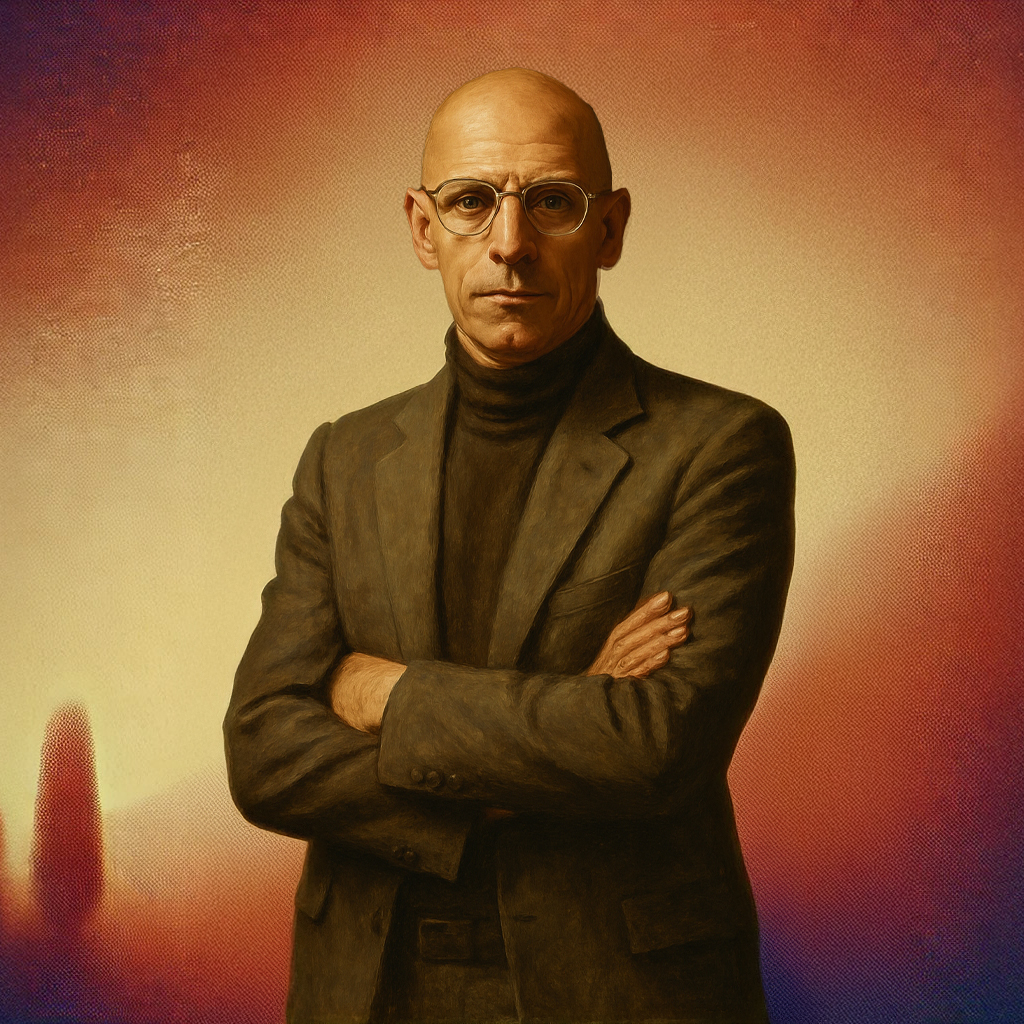
What Can He Teach Me?
Foucault is dense, no doubt—but once you crack his core ideas, they change how you see everything. Here’s what he helps us notice:- Power Hides in Plain Sight – We think of power as top-down—governments, police, laws—but Foucault showed it lives in the subtle stuff: how we speak, what’s “normal,” who gets labeled sick or sane. Power works through us, not just over us.
- There’s No “Pure” Truth – What counts as knowledge isn’t just discovered—it’s created. Foucault called this power-knowledge: systems of truth shaped by whoever’s in charge. It’s not that truth doesn’t exist, but that it’s always tied to context and control.
- Surveillance Shapes Behavior – In modern life, we internalize authority. We act like we’re being watched even when we’re not. His metaphor? The panopticon—a circular prison where one guard can observe all inmates, so everyone behaves as if they’re being watched. Sound familiar?
- Identity Isn’t Fixed – You’re not one thing. Labels like “mad,” “criminal,” or even “sexual identity” are historical constructions, not timeless truths. Foucault invites you to question how you’ve been defined—and to resist being boxed in.
- Freedom Starts With Awareness – Foucault didn’t offer a manual for liberation. Instead, he believed that by tracing how we’re shaped, we open up space to act differently. The first step to freedom is recognizing how you’ve been molded.
Notable Works
Foucault’s books aren’t casual reads, but they’re incredibly rewarding. Here’s where to start if you’re ready to challenge everything you thought was just “how things are.”:
- Discipline and Punish – A gripping history of how we went from public executions to internalized discipline. If you’ve ever felt watched, this one hits home.
- Madness and Civilization – Traces how society has treated the “mad” throughout history. Challenges the idea that mental illness is purely medical or objective.
- The History of Sexuality, Vol. I – Not about sex per se, but about how society talks about it—and how that talk becomes a form of control.
- The Archaeology of Knowledge – Foucault’s own guidebook to his method. Abstract, but great if you want to understand how he thinks.
- The Order of Things – A philosophical mind-bender. Explores how what counts as “science” or “truth” changes across time. (Read a physical or digital copy—this one’s hard to find fully online.)