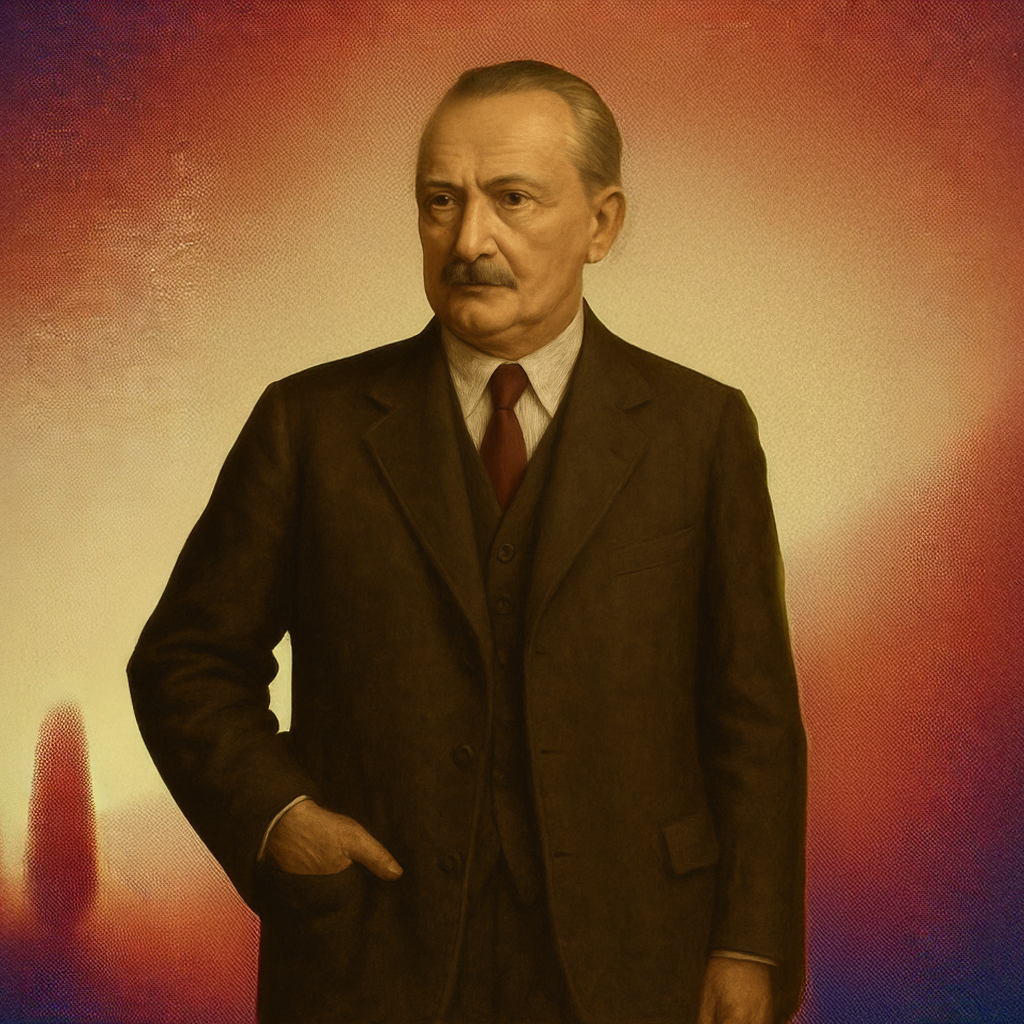
Few philosophers have wrestled with the meaning of existence as deeply—and as mysteriously—as Martin Heidegger. Born in 1889 in Germany, Heidegger set out to answer one of philosophy’s oldest and most overlooked questions: what does it mean to be? In his groundbreaking book Being and Time, he challenged centuries of thought by shifting focus away from abstract ideas and toward real, lived experience. For Heidegger, philosophy wasn’t about floating above the world—it was about being fully immersed in it. Though brilliant, he remains a controversial figure for his political ties to the Nazi party, a dark shadow that can’t be ignored. Still, his ideas left a permanent mark on existentialism, phenomenology, and modern thought.
What Can He Teach Me?
Heidegger’s writing isn’t always easy—but behind the dense language lies a powerful invitation to live more consciously. Here’s what we can take from his work:
Live Like It Matters – Heidegger believed we’re all shaped by the world we’re “thrown” into, but that doesn’t mean we’re stuck. We can choose to live authentically, in full awareness of who we are and what truly matters to us.
Face Your Mortality – Death wasn’t something to fear for Heidegger—it was a wake-up call. Knowing our time is limited helps us prioritize what’s real and stop getting lost in distractions.
Rethink What It Means “To Be” – Heidegger challenges us to see being not as some static fact, but as an unfolding process. We don’t just exist—we’re always becoming.
Pay Attention to the Everyday – Instead of chasing grand theories, Heidegger looked at how we exist in the world through things like using a hammer, walking through a forest, or having a conversation. Ordinary life reveals deep truths—if we notice them.
Technology Isn’t Neutral – In his later work, Heidegger warned that modern technology changes how we relate to the world—and not always in good ways. We risk seeing everything, even ourselves, as resources to be optimized.
Notable Works
Heidegger wrote a lot—and he’s not always the easiest read. But if you’re up for the challenge, here are the key texts that define his thinking:
Being and Time – His magnum opus. A deep dive into what it means to be, what it means to be human (Dasein), and why confronting our own mortality matters. Start here if you want the full Heidegger experience.
Introduction to Metaphysics – Builds on the ideas in Being and Time, asking the famous question: “Why is there something rather than nothing?” A powerful reflection on Western thought, language, and destiny.
Poetry, Language, Thought – A more poetic Heidegger. These essays explore how language and art uncover truth in ways logic can’t. Accessible and beautifully written.
The Question Concerning Technology – A short but sharp critique of how modern technology “enframes” us, shaping how we see the world—and ourselves.
Mindfulness – One of his later, more introspective works. Written during WWII, it reflects on Western history, responsibility, and what it means to think deeply.
Recent Blogs About Heidegger
Heidegger pushed philosophy back into the lived world—where we work, love, build, and die. Check out our latest blogs that engage with his ideas: