I want to start this blog off with some sage words from the famous philosophical ensemble Boyz II Men: “It’s so hard to say goodbye to yesterday.” Not to get all emo about it, but currently, these words resonate with me on a deep level. Over the past year, I have had to say goodbye to more people, dreams, and places than I would have liked. And though most goodbyes were, in one way or another, of my own making, it remains a difficult thing to let go, even when you know it’s what needs to happen.
So what does philosophy tell us about saying goodbye? Why is saying goodbye difficult? Should we say goodbye more often? Or should we focus on saying hello?
Why Is It So Hard to Say Goodbye to Yesterday?
Let’s be real: goodbyes suck. Even when they’re your choice. Even when they’re overdue. Even when you know they’ll lead to growth. There’s something about letting go that hits deeper than logic can reach.
One reason is that goodbyes aren’t just about what you’re walking away from, but who you were when that thing was part of your life. When you say goodbye to someone or something, you also say goodbye to a version of yourself, the one that existed in that context.
Søren Kierkegaard called this experience angst, the anxiety that shows up when you realize you’re free to choose, but that every choice comes with loss. Saying goodbye means stepping into uncertainty. You know what you’re leaving behind, but not what’s ahead. And that space in between? It can feel like falling.
Heidegger went even darker. For him, every goodbye is a kind of tiny death, a reminder that nothing lasts, including us. His term being-toward-death captures how saying goodbye confronts us with the truth that we’re all temporary. (Please don’t let this ruin your day.)
Even the Stoic Seneca, who preached emotional restraint, admitted how hard this can be. In his Letter to Marcia, he acknowledges that even the wise grieve, but reminds us that grief should be proportional to the nature of the loss, and that expecting things (or people) to last forever is what creates unnecessary suffering.
“A wise man may grieve, but he will not be overwhelmed by sorrow. He will feel it, but be held steady by reason.”
There’s another layer to this. Sometimes, it’s not even your fear that holds you back, it’s other people’s. Friends, partners, even family can resist your goodbye. Not always out of love, but out of fear. Simone de Beauvoir might say they’re afraid of what your departure does to their identity. If you were their confidant, support system, or even just a familiar presence, your absence shakes their sense of stability.
Nietzsche would, in classic fashion, probably be more blunt: most people don’t want you to change, because it makes them question why they aren’t. Your growth can feel like an unspoken challenge to their comfort zone.
And Epictetus, ever the Stoic coach, would remind you that your responsibility isn’t to be someone else’s emotional safety net. Your duty is to live according to your values, not to stay small, so others don’t have to adjust.
That doesn’t mean you cut people off coldly. But it does mean that staying in a situation just because someone else doesn’t want you to leave is not a good enough reason.
“To will oneself free is also to will others free.”

Is It Just Emotion? Or Is There Some Logic to the Pain?
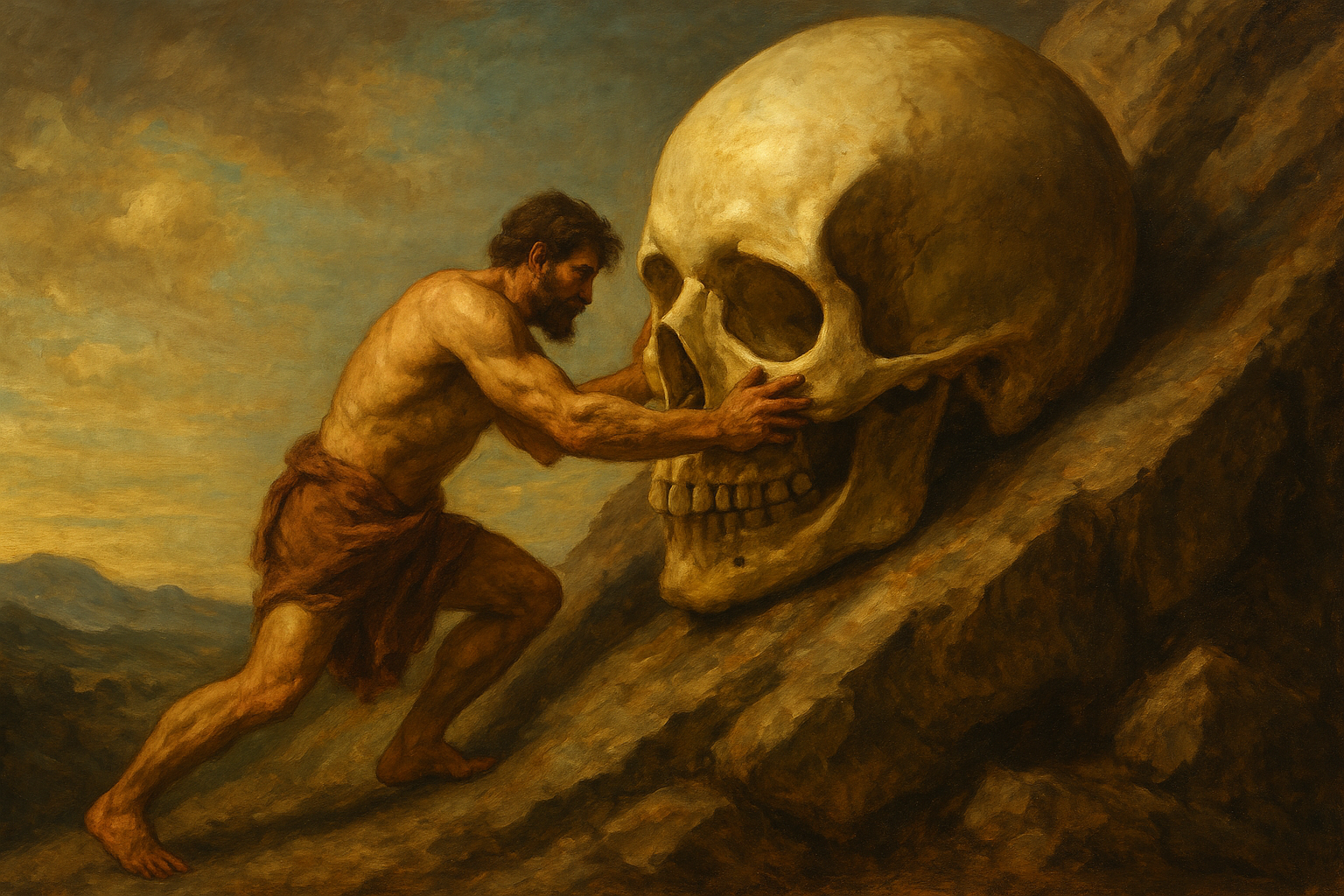
It’s both. A copout answer, I know. But that doesn’t mean emotion is irrational, it just plays by different rules. Albert Camus would say your discomfort is the absurd knocking on your door. You want permanence, clarity, and closure, but life offers change, uncertainty, and endings. The tension between those two is what makes goodbyes feel so emotionally intense.
Buddhist thought sees this suffering as the result of clinging. You get attached to how things are, or how they once were, and that attachment makes letting go painful. The logic is clear: the more tightly you hold on to something impermanent, the more it will hurt when it slips away (as it inevitably will).
And if you ask the Stoics, they’ll tell you that emotion isn’t the enemy, it’s just data. You can feel grief, fear, or sadness without letting those feelings dictate your actions. The emotions will come. But you get to choose how to respond.
“There is no love of life without despair about life.”

If goodbyes hurt, it’s tempting to avoid them. But what if that pain is exactly what pushes you forward? Underneath the discomfort, goodbye holds power, not because you’re turning your back on something, but because you’re turning toward something else. Growth. Freedom. A future that’s more aligned with who you are now, not who you used to be.
Nietzsche didn’t sugarcoat change. He believed that to fully become yourself, you have to go through periods of destruction, breaking off parts of your identity that no longer fit. Painful? Yes. But also essential.
That chaos often comes in the form of a goodbye, the in-between space where you’re not who you were, and not yet who you’re becoming. Nietzsche saw this not as a problem, but as a necessary step in transformation. He used a snake as his metaphor: if you refuse to shed your skin, if you cling to an outdated version of yourself, you die internally, even if you’re still breathing.
Simone de Beauvoir took a similar view, though more relational. For her, human identity is never fixed. You are always in flux, always negotiating between freedom and the roles you’ve taken on. Saying goodbye – especially to a relationship or version of your life that once gave you meaning – is a bold act of reclaiming that freedom. You’re no longer letting past commitments define your future self.
In a way, every goodbye is a declaration: I’m not done becoming.
“The snake which cannot cast its skin has to die. As well the minds which are prevented from changing their opinions; they cease to be mind.”

That’s often the fear behind the hesitation. What if you leave… and there’s just a void?
Camus would say: yep, that’s entirely possible. And you should still do it anyway. He called this confrontation with the void the absurd, the feeling that life doesn’t come with preloaded meaning or guarantees. But rather than despair, Camus saw an opportunity: if nothing is promised, then everything is open. Your freedom isn’t a curse, it’s a canvas.
Letting go can feel like standing on the edge of a cliff with fog below. But the alternative, staying somewhere you don’t belong just because it’s familiar, is a slow spiritual death.
Laozi offers a more peaceful version of the same idea. In Taoism, non-attachment isn’t about being cold or uncaring; it’s about staying open to the flow of life. Letting go isn’t rejection. It’s trust. You don’t always have to know what’s next to know it’s time to move.
And even the Stoics, who were all about logic and virtue, believed that holding on too tightly to the past gets in the way of living well. For them, the problem isn’t the goodbye itself, it’s the way we fight it. The emotional aftermath often causes more suffering than the actual event. You cling, you resist, you replay it in your head, and that’s what weighs you down. Letting go doesn’t mean you don’t care. It just means you’re choosing to respond with clarity, not just emotion. That’s the kind of strength they aimed for: not cold detachment, but grounded perspective.
“When I let go of what I am, I become what I might be.”
This is the part that’s hardest to believe when you care about someone: that your leaving might actually be good for them, too.
But staying for their sake – out of guilt, obligation, or fear of hurting them – can quietly turn toxic. When you shrink yourself to fit a life that no longer fits, you’re not protecting them. You’re just postponing the inevitable.
Epictetus would be blunt about this. Your role isn’t to ensure others feel okay all the time, it’s to act with integrity. That means being honest about when something has run its course and trusting others to handle their own path, even if it stings at first. And sometimes, your departure is the very thing that sets someone else free.
It might force them to find new sources of support. To question their own stagnation. To reimagine their own life. It might take time, and yes, it might hurt, but it’s real. And reality, even when painful, is ultimately more empowering than illusion.
Because the truth is: goodbyes aren’t just endings. They’re catalysts.
“Whenever externals are more important to you than your own integrity, then be prepared to serve them the remainder of your life.”

If goodbye is the closing of one door, this part is about the one that’s opening. There’s a moment after every ending where you get to decide what happens next. And it’s tempting to look back, to obsess, analyze, miss, regret. But at some point, you have to ask: what are you moving toward? Because staring at the closed door too long means you miss the one that’s cracked open right behind you.
Should you be stuck in the past? No – and not because the past doesn’t matter, but because you aren’t there anymore. Marcus Aurelius didn’t waste much energy on nostalgia. He saw it as a distraction. In Meditations, he reminds himself to focus on living in the present.
You can reflect. You can feel. But you live here, now, not in the replays of yesterday. Getting stuck in the past often means you’re assigning meaning to things that have already lost their grip on your present reality. The job that gave you purpose. The person who once made you feel seen. The city that felt like home. At some point, the question isn’t “What did it mean?” but “What do I want now?”
“Forget everything else. Keep hold of this alone: remember that every man lives only in the present, this fleeting instant.”

Because change is not the exception, it’s the default. Heraclitus, the ancient Greek philosopher who basically invented the concept of change-as-truth, famously said that no man ever steps in the same river twice, for it is not the same river and he is not the same man.
You can try to resist it. You can cling to your old routines, roles, or relationships. But the river is moving. You are moving. And the more you try to hold still, the more you’re fighting reality.
Saying hello to the new, to change, to possibility, is an act of alignment. It doesn’t mean forgetting what came before. It means accepting that your identity isn’t something you protect like a museum exhibit. It’s something you build, moment to moment.
Existential philosophers like Sartre would argue that you’re never a finished product. You’re always becoming, always choosing. “Existence precedes essence.” Meaning, who you are is not fixed. It’s created by the choices you make. And the next choice is always available.
So yeah, you could try to stay in the past. But you’d be doing it from a present that’s already different. Change is here, whether you like it or not. The only question is whether you want to meet it halfway.
“Man is nothing else but what he makes of himself.”

Here’s the underrated part of every goodbye: it makes room for a hello.
And that hello can be anything, a new city, a new routine, a new connection, a new sense of self. Sometimes it’s subtle. Sometimes it’s life-changing. But it always carries potential. You’re planting a flag in the future. You’re saying: I may not know exactly where I’m going, but I know I’m not going back.
Even Kierkegaard, master of existential dread, believed in this forward movement. He described life as something that must be lived forward, even if it’s only understood backward. Reflection is important, but direction is what keeps you from getting stuck in the mirror.
And saying hello doesn’t have to be grand. It can be as small as making a new habit stick. Reaching out to someone new. Or waking up and deciding you’re going to do things differently this time.
So take the step. You’ve said goodbye. That was brave. Now say hello, to the road ahead, to who you might become, to the next version of your life.