Philosophy in Paris: The Price of Freedom
Over the last two weeks, I’ve been enjoying a workation in Paris. As a philosophy buff, it was a trip I had been looking forward to for quite some time. So when the time finally came, and I was sitting on the train towards the city of love, armed with an 800-page-thick copy of Sartre’s Being and Nothingness, I just knew that inspiration for a blog was around the corner.

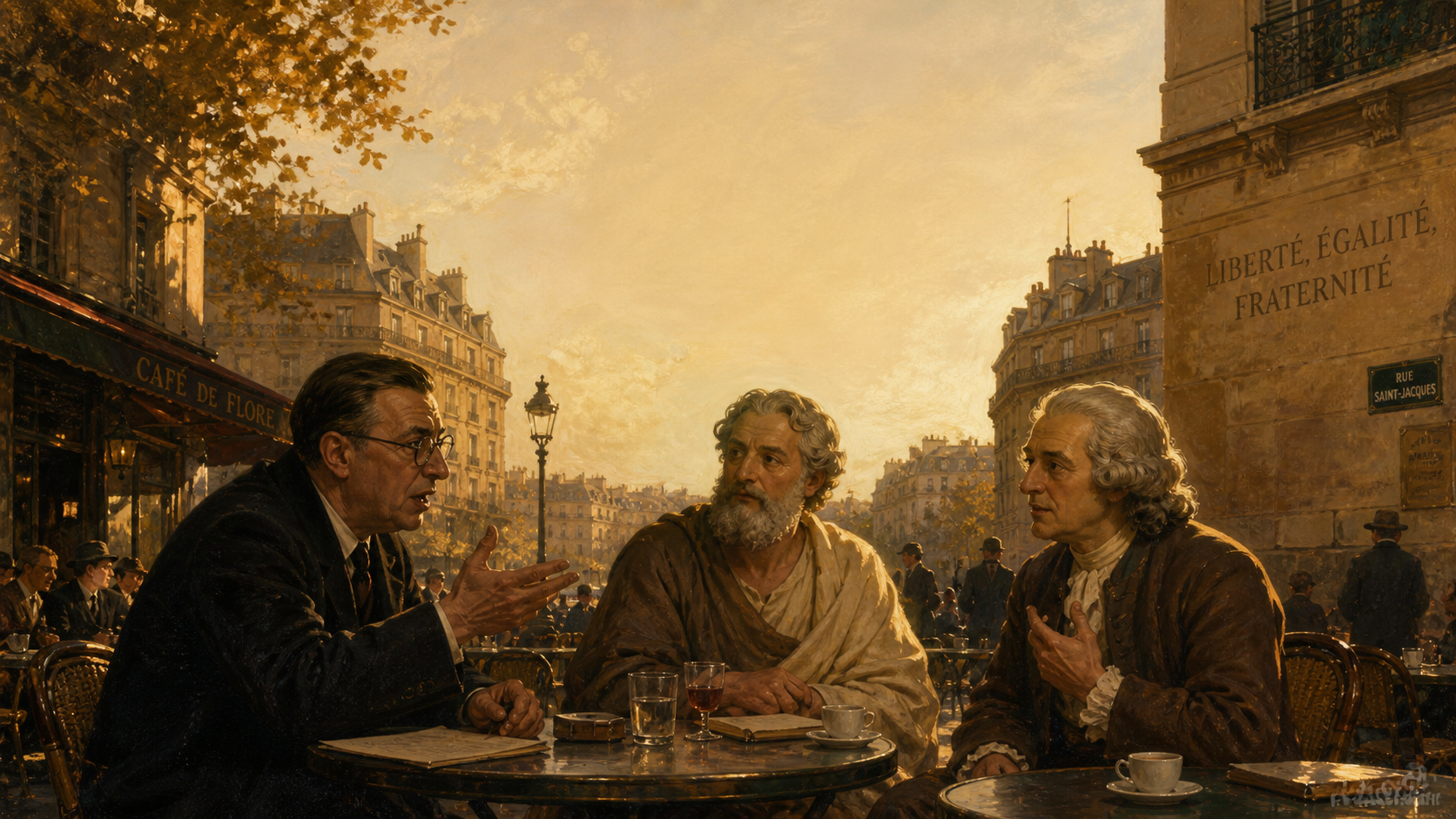
The funny thing is, I didn’t need that book for inspiration at all. Sitting on a typical Paris café terrace, including the mandatory way-too-small tables, my muse came in the form of some good friends who had joined me in the city for a weekend, a couple of drinks, and (as is mandatory in philosophy) a passionate debate that ended with no one convincing anybody but themselves.

As if inspired by our location and its history, we had a discussion on one of the three French democratic values: Liberté (aka freedom). And what struck me most was how different the feeling on the topic was on both sides of the table. A buddy and I reflected on how privileged we are to have the freedom we have today, while the other two felt about as free as traffic circling the Arc de Triomphe.

How can you be in one of the most symbolic places of freedom… and still feel like you don’t have any?


What Do We Mean by Freedom?

It’s needless to say that freedom is a huge topic. And it’s one of those words where, especially in Western society, people instantly feel all warm and fuzzy when someone promises more of it. It’s been fought over in revolutions, and at the same time used to justify invading countries that just so happen to have a ton of oil in their ground. It shows up everywhere, sometimes as something worth fighting for (think Orwell’s 1984), and other times as something unsettling, even unwanted (like when Bilbo Baggins is offered the chance to leave the Shire, and isn’t exactly thrilled about it).

It seems that despite what we often believe, there’s good but also bad in freedom. And looking at Webster’s definition of freedom, it’s not hard to understand why: freedom is the absence of necessity, coercion, or constraint in choice or action.

Freedom is, by its nature, an absence of sorts. It’s not a guiding light to happiness, it’s not comfort, and it doesn’t mean there are no consequences. It’s the scary situation where you are alone in the responsibility for your own actions and choices.

This isn’t a new tension. Philosophers have been wrestling with it for centuries. So let’s borrow a few of their lenses, starting, fittingly, in Paris.


Freedom as a Burden

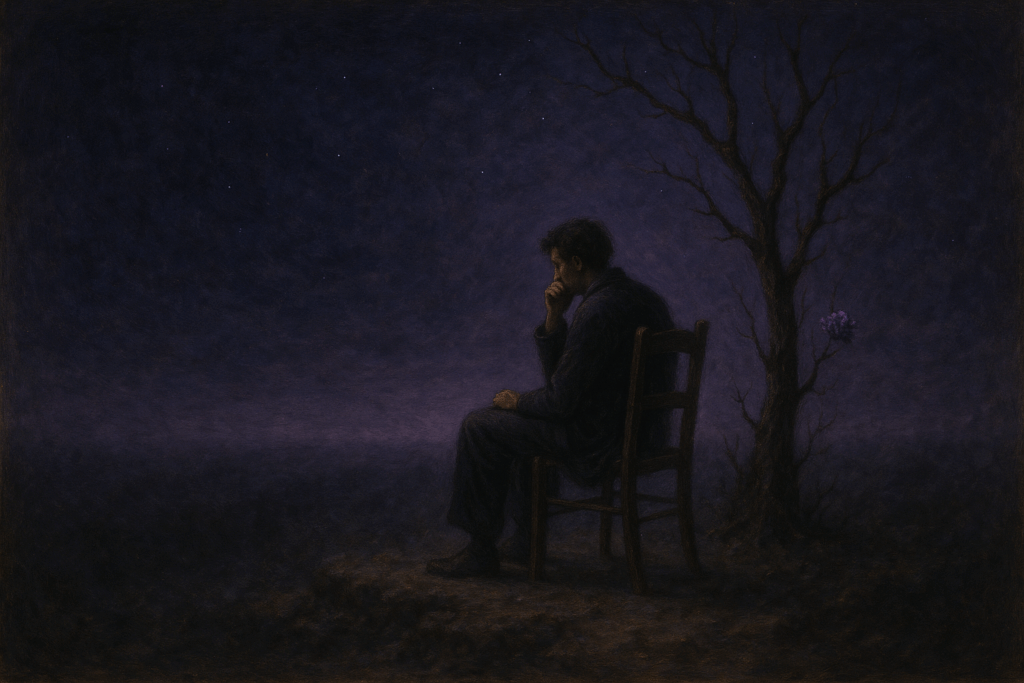
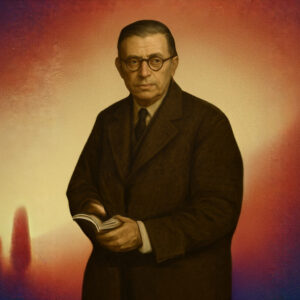
This is where Jean-Paul Sartre enters the terrace. Because if freedom already felt a bit uncomfortable in theory, Sartre takes that feeling and turns it up to a level where you can’t really ignore it anymore. His claim is simple, but not exactly comforting: we are “condemned to be free.” Not free in the sense that everything is easy or available, but free in the sense that we are always choosing. Even when we sit still, go along with the group, or tell ourselves we’ll decide later. That is still a choice. There is no neutral position, no pause button where responsibility disappears for a moment.

And that is exactly where freedom starts to feel less like a gift and more like a burden. Because if every action, every hesitation, every “I’ll think about it” is something you are actively doing, then there is nowhere to hide. You can’t fully blame your circumstances, your personality, or the situation you find yourself in. Those things shape the playing field, but they don’t make the move for you. Which means that the feeling of being “stuck” is often less about lacking freedom and more about not liking the choices available.

So what do we do with that discomfort? According to Sartre, most of us try to soften it. We tell ourselves stories that make things feel more fixed than they really are. That we “can’t” leave, that we’re “just not that type of person,” that this is simply how things are. It takes the edge off. But it also quietly takes away the very thing we claim to want more of. Because if you’re not choosing, then you’re not free. And if Sartre is right, that’s not a reflection of reality, but a story we tell ourselves to make that reality easier to live with.

“Man is condemned to be free; because once thrown into the world, he is responsible for everything he does. It is up to you to give [life] a meaning.”

 

Freedom as Control

If Sartre leaves you sitting there with the uncomfortable realization that you’re always choosing, Epictetus offers a way to actually deal with that weight. Not by denying freedom, but by narrowing it down. His starting point is almost disarmingly simple: some things are up to you, and some things are not. And most of the frustration we feel comes from mixing those two up. We try to control how people respond to us, how situations unfold, how life plays out. And when that inevitably doesn’t work, it feels like freedom is slipping through our fingers.

Epictetus flips that completely. Freedom, for him, is not about having endless options or getting the outcome you want. It’s about recognizing that your freedom is internal. It lives in how you interpret things, how you respond, what you choose to value. Your thoughts, your judgments, your actions—that’s your domain. Everything else, from other people’s opinions to the result of your efforts, sits outside of it. Not because it doesn’t matter, but because it was never yours to control in the first place.

And once you start looking at it that way, something shifts. The noise quiets down. You can still act, still aim for things, still care. But you’re no longer tying your sense of freedom to whether the world cooperates. Because it often won’t. Where Sartre confronts you with the weight of your choices, Epictetus shows you where that weight actually belongs. Not in everything, but in the part that is yours. And in that space, small as it might seem, you are completely free.

“Don’t seek for things to happen as you wish, but wish for things to happen as they do happen, and your life will go smoothly.”

 

Freedom and Society

If Sartre turns freedom into a burden and Epictetus brings it back inward, Jean-Jacques Rousseau shifts the conversation to something we hadn’t really questioned at that café table. What if the feeling of being unfree isn’t just about you, but about the world around you? His famous line, “Man is born free, and everywhere he is in chains,” lands differently once you sit with it for a moment. Because it suggests that maybe that traffic-around-the-Arc-de-Triomphe feeling isn’t just in your head. Maybe there are real constraints at play.

But Rousseau doesn’t stop at pointing fingers at society. He also makes a slightly uncomfortable point in the other direction. Those same structures that limit you are also the reason you’re able to live the life you have. Laws, systems, expectations. They restrict, sure. But they also make cooperation possible. Without them, freedom quickly turns into chaos. So the question shifts. It’s no longer just “am I free?” but “what kind of structure am I living in?” And more importantly, does it reflect something I actually stand behind?

That’s where Rousseau adds nuance to the whole idea of freedom. Constraints aren’t automatically the enemy. Some of them are the very thing that make freedom possible in the first place. The difference is whether they feel imposed on you, or whether they feel like something you’re part of. Because there’s a big gap between being controlled by a system and choosing to live within one. And maybe that’s where the real tension from that conversation in Paris was sitting all along. Not in whether we were free or not, but in whether the structures around us felt like ours.

“The mere impulse of appetite is slavery, while obedience to a law which we prescribe to ourselves is liberty.”

 

So… Are We Actually Not Free?

Back at that table in Paris, somewhere between the drinks and the back-and-forth, something clicked for me. After going in circles on freedom, I asked a simple question: how exactly is your freedom being limited? Not in theory, but concretely. What is it that you want to do, but genuinely can’t?

And what followed wasn’t a list. It was silence. Thinking. Searching. Which already says something. Because if a lack of freedom is something you feel strongly, you’d expect it to be easy to point at. Then again, I get it. Sometimes it just feels restrictive without a clear cause.

The first real example that came up was about building something in a garden. A covered space to sit in, but then permits, regulations, the municipality… too much hassle. Fair. We’ve all been there. Though it was slightly funny, because the person bringing it up didn’t actually have a garden.

Looking back, that’s where it gets interesting. You are free to build something like that. But that freedom comes with responsibility. Making sure it’s safe. Fits the rules. Doesn’t annoy the neighbors. Exactly what Rousseau was getting at. Society constrains you, but those constraints also make living together possible.

At the same time, you’re still choosing. Choosing not to deal with what comes with it. That’s Sartre. And zooming out, the only part that was really yours was how you responded to it. Very Epictetus.

Somewhere between those three, that conversation started to look different to me afterwards. Not in a “just deal with it” way, because life is messy. Things don’t always go as planned. I’ve been there too.

It turns out that what we often call a lack of freedom is not always about being unable to act. It’s about not wanting what comes with that action. You can quit your job, but not want the financial uncertainty. You can move countries, but not want the paperwork. You can go on an adventure, but not want the unknown. So instead, it becomes “I can’t.” Which sounds a lot better than saying: “I don’t want the consequences.”

“Freedom is what you do with what’s been done to you.”
 

Maybe It’s Not About Freedom After All

Somewhere between that café table, a couple of drinks, and me probably getting a bit too passionate for a casual weekend conversation, something shifted for me. Not in what I believe about freedom, but in how I saw what we were actually arguing about. Because looking back, it didn’t really feel like we were debating freedom. It felt like we were defending something. Almost protecting it. And I get that. The moment someone suggests you might be more free than you feel, it can sound like they’re dismissing your situation. That wasn’t what I was trying to do then, and it’s not what I’m trying to do now.

What I was trying to get at is this: the way you frame your freedom matters more than the situation itself. If you say, “my freedom is being taken from me,” you hand control over to whatever or whoever is limiting you. And once you’ve done that, there’s not much left to do but wait or complain. But if you look at that same situation and think, “this is a responsibility I now carry,” something shifts. Not because the situation suddenly becomes easy, but because you’re still in it. You still have a say in how you respond, what you do next, how you move forward.

And that’s probably why I cared enough to push back at that table. Not to win an argument, but because I genuinely think this way of looking at things gives you more room to move. It keeps you in the driver’s seat, even when the road isn’t exactly what you would have chosen. Sitting there in Paris, surrounded by a city that practically breathes the word liberté, I think I started to see it differently. Not as the absence of constraints, but as the presence of choice—and maybe more importantly, the responsibility that comes with it.

Previous Post

Next Post

Loading Next Post...
Search
Loading

Signing-in 3 seconds...

Signing-up 3 seconds...