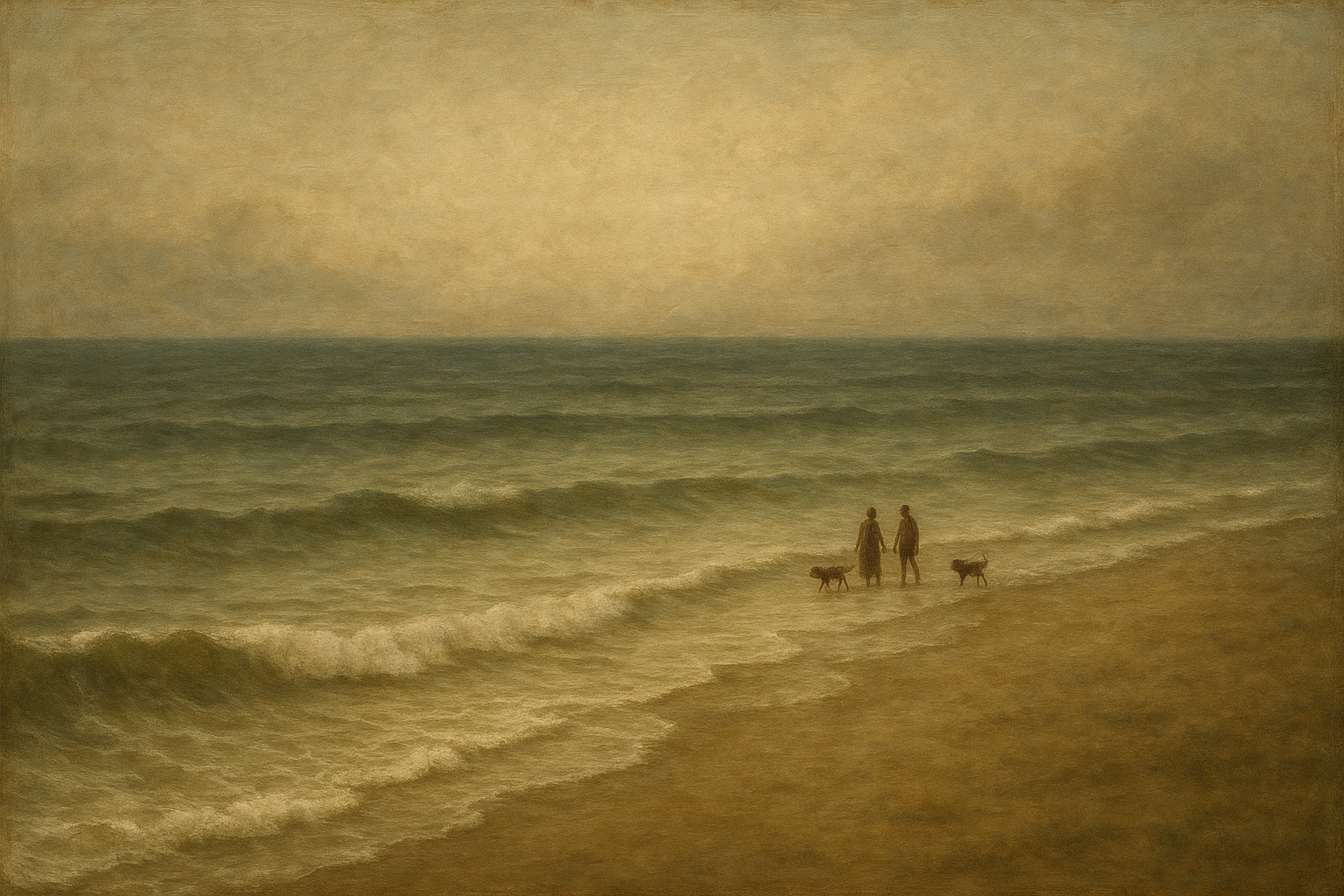
You must be lonely. That’s what people back home said when I told them that I hadn’t yet met a ton of new people after living abroad for a month. It made me think every time I heard it. I surely didn’t feel lonely, but admittedly, I was by myself a lot around that time. But does being alone automatically mean you are lonely? Or is it other people who make us feel that way? But first, why should we even care about this distinction?
“A person can be themselves only so long as they are alone; and if they do not love solitude, they will not love freedom; for it is only when they are alone that they are really free.”

The difference between being alone and being lonely is more important than it might seem. Not just as a philosophical word game, but because how we label our experience shapes how we feel about it. The way we think about ourselves, and the stories we tell ourselves about our circumstances, directly influences our emotions and actions. That’s why we have to be careful: not just with how others frame our experience, but with how we do.
Being alone is neutral. It’s just a fact, you are by yourself. That’s it.
Feeling lonely is something else entirely. It’s a judgment. It’s emotional. It implies a lack, a longing for someone who isn’t there, a sense of absence, maybe even rejection.
This distinction matters. Because once you start interpreting aloneness as loneliness, your thoughts follow. And your emotions soon catch up. Before you know it, you feel lonely, not because the situation changed, but because your perception did.
Yet spending time alone can be incredibly valuable, even enjoyable. It can be peaceful, productive, and freeing. But only if we allow it to be. That starts with how we think about it.
“The soul becomes dyed with the colour of its thoughts.”

Proving that being alone and being lonely are not the same is actually pretty straightforward. Being alone, by definition, excludes others, it’s just you. The moment someone else enters the equation, you’re no longer alone. It’s a factual state. Simple.
Loneliness is trickier. It always involves someone else, or at least the absence of someone else. A friend who stopped calling, a parent in another country, a partner you’ve grown apart from, or even a fictional character you wish was real. Loneliness is never just about the lack of people, but about the lack of connection.
And here’s where the paradox kicks in: being with others can make you feel more lonely than being alone ever did. You can be at a party and feel invisible. You can be in a relationship and feel misunderstood. You can sit across from friends you’ve outgrown and feel like you’re miles away.
As Sartreput it, and it’s often misunderstood, “Hell is other people.” That doesn’t mean that all human relationships are doomed. What he actually meant was that when your relationship with others becomes twisted or overly dependent on their judgment, it can feel like hell. You’re not really with others then. You’re trapped inside their gaze, trying to perform, trying to belong.
Which reminds me of one of my favorite Mac Miller songs. I love when philosophy and music come together, when the philosophers of long ago and the artists of our time wrestle with the same questions. Different words, same human condition.
“Yeah, well, sometimes I get lonely, not when I'm alone. But it's more when I'm standin' in crowds that I'm feelin' the most on my own.”

So if being around people can still leave you feeling lonely, what exactly is it that’s missing?
It’s not company. It’s not conversation. It’s connection. Not surface-level interaction, but something deeper: the feeling of being seen. Noticed. Recognized for who you are, not just the role you play. That’s what makes loneliness so confusing, you might be surrounded by people, yet still feel invisible.
This isn’t just emotional, it’s philosophical. We often think of identity as something we figure out on our own, in solitude. But some philosophers saw it differently. They argued that we come to know ourselves through our relationships with others, not just any relationships, but the kind that reflect us back to ourselves in a meaningful way.
Martin Buber’s idea of the “I–You” relationship is key here. Most interactions in life are what he called “I–It”: functional, transactional, impersonal. But in an “I–You” moment, you meet another person in their full humanity, and they meet you. Someone special. It’s rare, but unforgettable. And when you’ve known what that feels like, and then lose it, it leaves a very specific kind of absence behind.
It’s that absence that defines a certain kind of loneliness: not the lack of people, but the lack of encounter.
Hannah Arendt adds another layer. Even when we’re alone, she says, we carry on a silent dialogue with ourselves, a two-in-one. But even that internal dialogue relies on our relationships with others. Why? Because it’s through others that our sense of self gets confirmed. Without that echo, the voice in your head starts to feel untethered.
Loneliness, then, isn’t just sadness. It’s a philosophical disorientation. It’s what happens when the mirror of relationship disappears, and you stop recognizing yourself.
“For the confirmation of my identity I depend entirely upon other people.”

Loneliness can feel overwhelming, like something that happens to us. But sometimes, the solution isn’t to run from solitude, but to turn toward it. When connection feels out of reach, solitude becomes a place to reset. To think clearly. To figure out what it is you’re actually missing, and what you can do about it.
Marcus Aurelius, writing nearly two thousand years ago, knew this well. While others sought peace in faraway places, he reminded himself that “it is possible to retreat into yourself whenever you please.” True rest, true clarity, doesn’t come from escape, it comes from inner stillness.
But solitude isn’t automatically helpful. Seneca warned that if you’re not intentional with your thoughts, being alone can just become a breeding ground for confusion and self-sabotage. That’s why solitude isn’t about isolation, it’s about reflection. Using that time to examine your judgments, your needs, and your patterns. To ask: Why do I feel disconnected? What kind of connection am I longing for? And is it something I can cultivate, or something I should let go of?
Montaigne, in his usual casual wisdom, suggested that the wise person can live content anywhere, but if given the choice, he’ll choose to be alone. Not because people are the problem, but because solitude clears the noise. It creates a space where your thoughts aren’t drowned out by others’ expectations.
Schopenhauer saw solitude as the condition of freedom. And Hannah Arendt offered a crucial distinction: loneliness is what we feel when we want company but can’t find it. Solitude, on the other hand, is when we are alone and at peace with it. It’s not withdrawal from life, but a return to yourself.
And maybe that’s the point. If you want to heal from loneliness, you need to understand it, and to do that, you often need quiet. Not to escape the world, but to re-enter it more whole. As Thomas Merton wrote:
“Out of pity for the universe, the solitary withdraws into the healing silence, not to preach to others, but to heal in themselves the wounds of the entire world.”