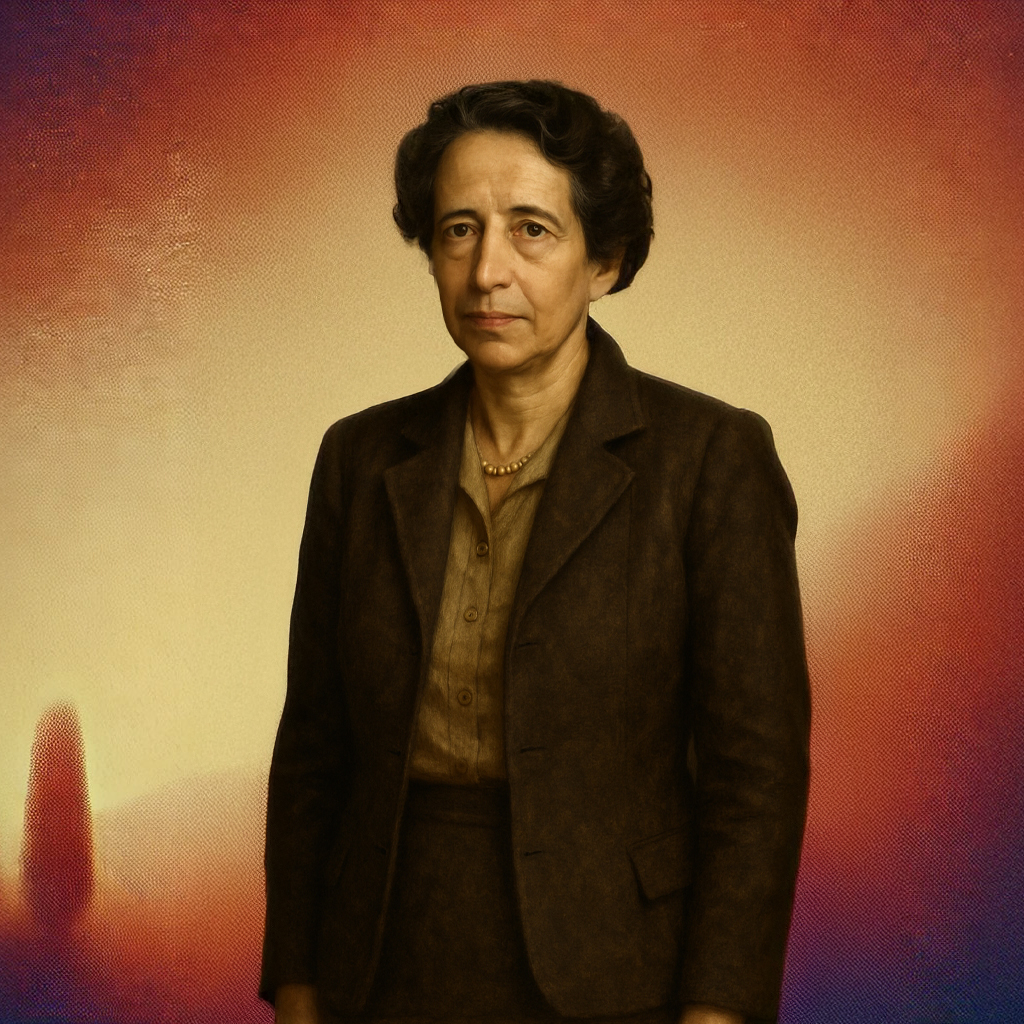
Hannah Arendt (1906–1975) never fit neatly into labels. A German-Jewish refugee who escaped Nazism and built her life in the United States, she became one of the boldest political voices of the 20th century. She didn’t just study politics from afar, she lived its upheavals and insisted on confronting uncomfortable truths. Whether analyzing the rise of totalitarian regimes, reflecting on what it means to act in freedom, or watching the trial of Adolf Eichmann, Arendt challenged readers to see how fragile, and how precious, human judgment and plurality really are.
What Can She Teach Me?
Arendt isn’t about tidy formulas. She pushes us to think harder about responsibility, action, and the spaces where we live together:
Resist Thoughtlessness – Evil doesn’t always roar; sometimes it creeps in through routine, obedience, and refusal to think. Keep questioning.
Value Public Life – For Arendt, freedom isn’t private, it happens when people speak and act together. Protect spaces where that’s possible.
Recognize Fragility – Societies can slide into authoritarianism step by step. Awareness is a safeguard.
Exercise Judgment – Don’t outsource morality. Pay attention to particulars, and be willing to stand alone when necessary.
Start Something New – Her concept of natality reminds us that every action can open a fresh beginning.
Notable Works
Arendt’s writings remain touchstones for anyone trying to understand politics, responsibility, and freedom: