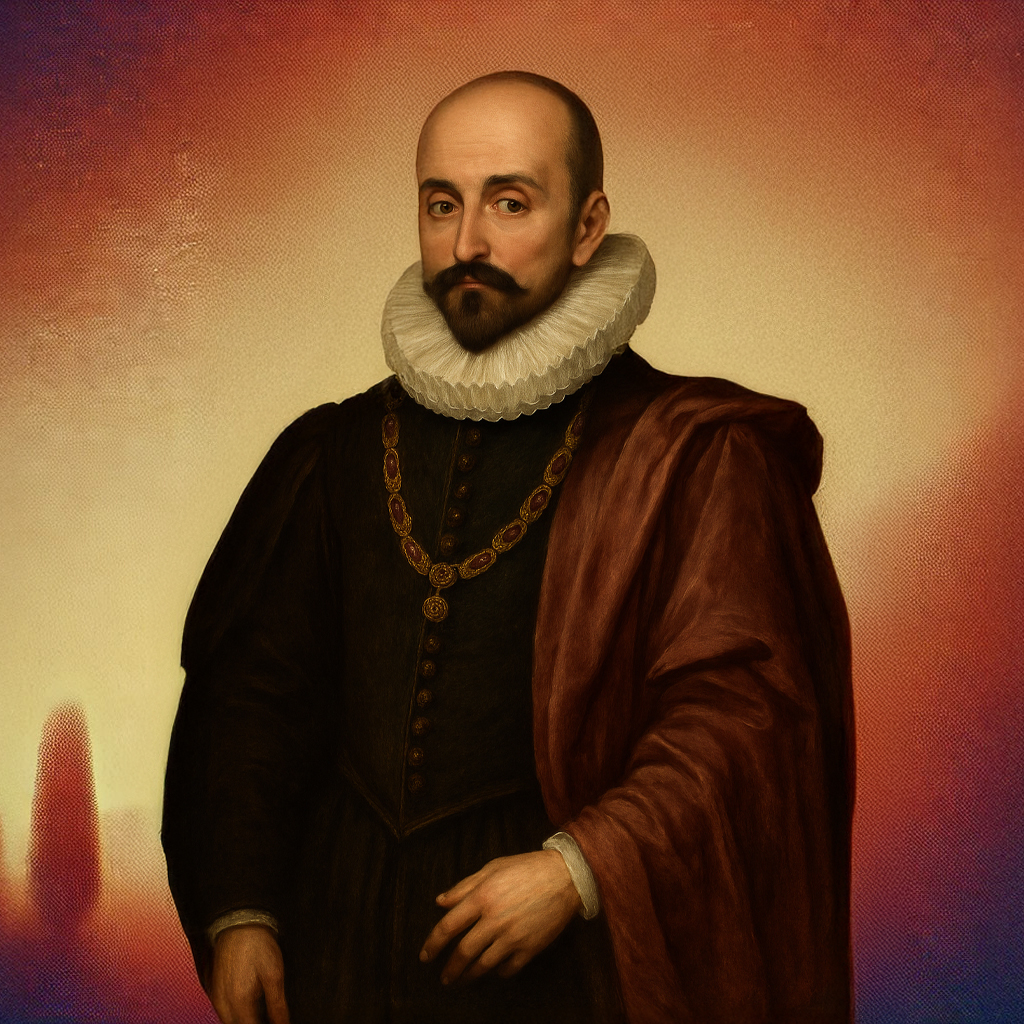
Long before journaling became trendy, Michel de Montaigne turned inward and made a whole genre out of it. Living in 16th-century France during the heart of the Renaissance, Montaigne was a nobleman, magistrate, and eventually a philosopher—not because he claimed to be, but because he couldn’t stop asking what it meant to be human. He wrote Essais (Essays), a collection unlike anything before it: deeply personal, filled with doubts, digressions, and classical references, and utterly honest. Retreating to his tower to write, he used himself as the case study for humankind. His motto? “Que sais-je?”—“What do I know?” A question, not an answer. That’s very Montaigne.
What Can He Teach Me?
Montaigne wasn’t interested in being a guru. He didn’t think he had the answers, and that’s exactly why he’s worth reading. Here’s what he invites us to consider:
Embrace Uncertainty – Montaigne made peace with not knowing. His whole approach was built on doubt—yet not a paralyzing doubt, but a freeing one. You don’t need to have it all figured out.
Know Thyself (Honestly) – Instead of pretending to be wise, he exposed his contradictions, fears, and bad habits. Real self-knowledge starts where image-making ends.
Start With the Everyday – He didn’t write grand systems of philosophy. He wrote about sneezing, friendship, sex, aging, and death. Philosophy, for Montaigne, begins at the breakfast table.
Live With Moderation – He didn’t chase extremes. Instead, he admired balance—between body and mind, between pleasure and restraint, between solitude and society.
Write to Understand – Montaigne wrote to figure out what he thought. His essays don’t preach—they wander. You don’t need polished thoughts to begin reflecting; you just need to begin.
Notable Works
Montaigne’s masterpiece is his one and only major work—Essais—but within it are dozens of deeply insightful, surprising chapters that stand on their own.
Essays – His full collection, constantly revised during his life. It’s personal, reflective, and full of timeless human observations. The best place to meet the mind of Montaigne.
Of Friendship – A meditation on deep connection, sparked by the death of his closest friend, Étienne de La Boétie. A beautiful blend of love, grief, and philosophical reflection.
Apology for Raymond Sebond – His longest and most philosophical essay, where he defends religious faith, questions reason, and dives deep into skepticism.
Of Experience – Written near the end of his life, this essay reflects on illness, aging, and the texture of everyday life. It’s Montaigne at his most mature and grounded.
Montaigne showed us that thinking deeply doesn’t have to be stiff or abstract. Our recent blogs featuring Montaigne bring his spirit into today’s world—whether you’re wrestling with uncertainty, journaling your thoughts, or just trying to be a bit more honest with yourself.