
When I first read The Subtle Art of Not Giving a F*ck, I was hooked. It was sharp, funny, and actually helpful. The idea of focusing your time and energy only on what truly matters really struck a chord with me—just like it did with millions of others (over 20 million copies sold!!).
So imagine my surprise when, a few years later, I started reading about Stoicism and realized… wait a minute. This all sounds kind of familiar. Was Mark Manson just repackaging Marcus Aurelius, Seneca, and Zeno?
Not exactly. And just to be clear: this isn’t a dig at Manson or self-help books in general. I read them too, and many are genuinely insightful. But it is fascinating how often today’s bestsellers echo questions and ideas that philosophers have been wrestling with for thousands of years. And maybe that’s the point. Our struggles—what to care about, how to change, how to live—aren’t new. They’re timeless.
So let’s take a look at a few modern self-help hits and see which age-old philosophical questions are still keeping us turning the page.
The Subtle Art of Stoicism
Let’s start with the book I mentioned in the intro. Mark Manson’s The Subtle Art of Not Giving a F*ck flips the script on the “feel-good, think-positive” culture of self-help. Instead of chasing constant happiness, Manson argues that life is suffering—and the trick is to suffer better. The core message is this: you only have a limited number of things you can truly care about, so spend that energy on what actually matters. Most people waste time and emotional energy obsessing over stuff they can’t control or that ultimately doesn’t align with their values. He urges you to embrace responsibility, face your limitations, and stop trying to be extraordinary just for the sake of being impressive.
Underneath the swearing and sarcasm is something pretty grounded: Manson is advocating for a life built on clarity, not delusion. You won’t find steps to manifest your dream house here. Instead, you’ll be reminded that pain is inevitable and that trying to avoid it just creates more of it. Want a meaningful life? Accept your problems, choose them wisely, and lean into the discomfort that growth requires. In short: care less, but care better.
Strip away the tone, and what Manson’s doing is classic Stoicism in a hoodie. His “don’t give a f*ck about everything” rule is a modern take on the Stoic dichotomy of control—the idea that we should only concern ourselves with what’s truly up to us, and let go of the rest. Like Epictetus or Marcus Aurelius, Manson sees our emotional chaos not as the fault of the world, but of our own distorted priorities. He’s not saying don’t care at all—he’s saying choose your values with intention, then commit to them fully, no matter how uncomfortable or inconvenient it gets.
Manson also echoes the Stoic view that suffering isn’t just part of life—it is life, and that’s not necessarily a problem. Where modern self-help often sugarcoats struggle, Stoicism (and Manson) say: no, face it. Your problems define you. Pick the right ones. There’s dignity in wrestling with what matters and ignoring the noise. The biggest difference? The Stoics would never put “f*ck” in the title—but they’d nod in approval at the message.
“It’s not things that upset us, but our judgments about things.”

James Clear’s Atomic Habits is a straight-talking manual for behavior change. The premise is simple: small, consistent actions—“atomic habits”—can lead to massive long-term impact. Instead of obsessing over goals, Clear wants you to build systems. If you want to be a reader, don’t set a goal to read 30 books this year—create an environment where picking up a book is easier than grabbing your phone. He breaks habit formation into four steps (cue, craving, response, reward) and builds a framework around that: make it obvious, attractive, easy, and satisfying.
But where the book really clicks is when it shifts from action to identity. Clear argues that real, lasting change happens when your habits reflect the person you believe yourself to be. You’re not just someone trying to run—you’re a runner. Every small habit becomes a vote for the kind of person you’re becoming. You don’t need to be perfect. You just need to keep casting votes in the right direction.
Aristotle would be right at home in Atomic Habits. In the Nicomachean Ethics, he wrote that virtue isn’t something we’re born with—it’s something we do into being. Just like a builder becomes skilled by building, a just person becomes just by acting justly. Character isn’t formed through a single heroic act, but by the repeated choices we make each day. Clear might call this “identity-based habits.” Aristotle would call it hexis—a settled disposition toward doing good.
For both Clear and Aristotle, you become your habits. If you want to live a good life—what Aristotle calls eudaimonia—you don’t wait for the right mindset to arrive. You show up. You practice. You do the thing. Over time, what once felt like effort becomes second nature. Goodness, discipline, courage—these aren’t traits you magically unlock. They’re the result of consistent, intentional repetition. And that’s the real power of habit.
“We are what we repeatedly do. Excellence, then, is not an act but a habit.”
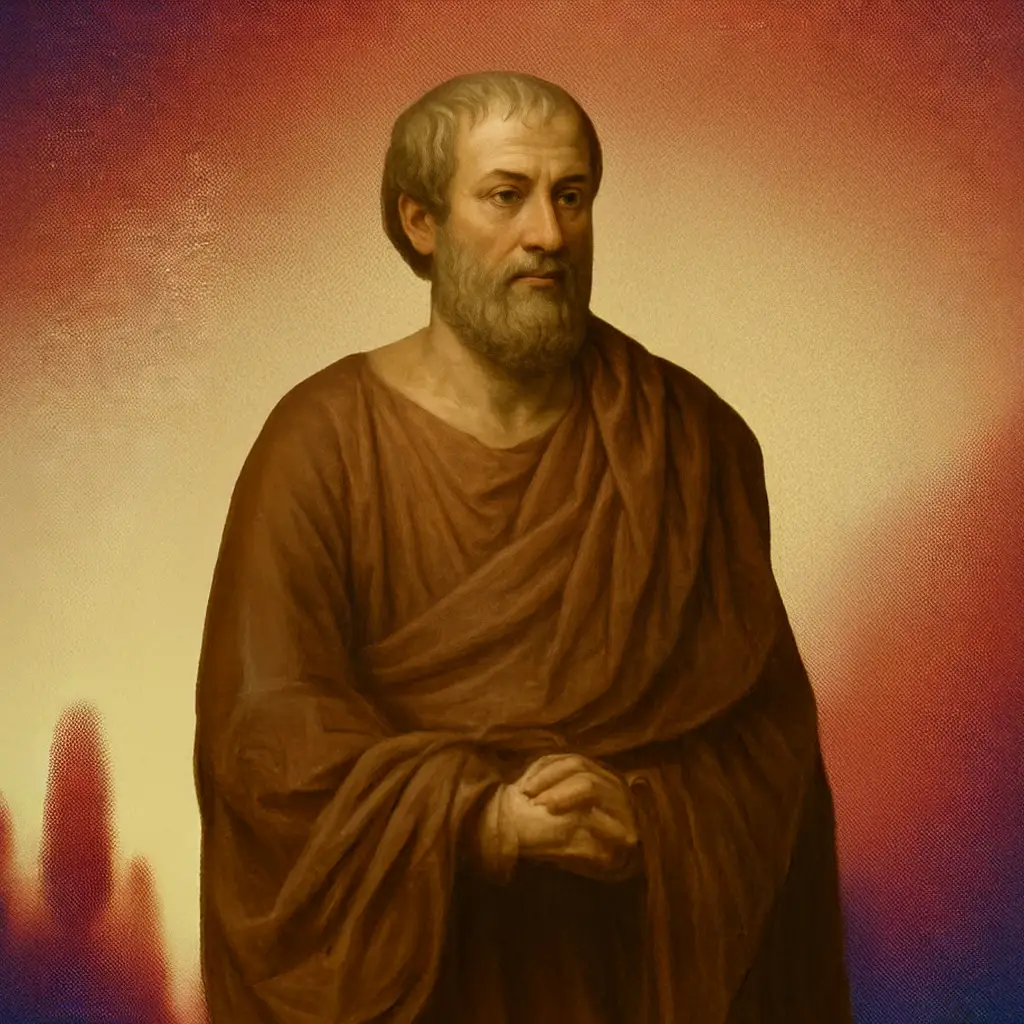
In Paulo Coelho’s The Alchemist, we read the story of Santiago, a shepherd boy who dreams of treasure and sets off across the desert in search of it. But (Mild spoiler ahead, but if you haven’t read it by now, that’s on you.) the real treasure turns out not to be gold buried near the pyramids — it’s the journey itself. Along the way, Santiago learns to listen to omens, trust his heart, and follow what Coelho calls his “Personal Legend” — the unique purpose each person is meant to fulfill. It’s a spiritual coming-of-age story, but millions of readers treat it like a self-help book. And that’s fair — it’s just disguised as fiction. It offers encouragement, clarity, and a kind of soft mysticism that tells you your life has meaning, if only you’ll listen.
What makes The Alchemist interesting is that it doesn’t preach discipline or strategy like most self-help. It leans into intuition, surrender, and faith — in yourself, in the universe, in a deeper order behind the noise. It doesn’t tell you to grind; it tells you to trust. For some, that’s cliché. For others, it’s exactly the reminder they need. And like many self-help books, The Alchemist borrows heavily from older philosophies — especially those that frame life as a meaningful journey inward.
Plotinus, the 3rd-century philosopher who founded Neoplatonism, believed that all things emanate from a single, divine source — The One. For him, life’s purpose wasn’t found in chasing external success but in turning inward, purifying the soul, and returning to unity with that source. The journey is mystical, symbolic, and deeply personal. That’s Santiago’s desert journey in a nutshell: a physical quest that mirrors a spiritual ascent. He starts outside himself, searching for treasure, and ends by discovering that what he’s been seeking was always within.
In Plotinus’ world, everything meaningful comes from aligning yourself with something deeper than surface reality — a kind of cosmic intelligence. Coelho’s “Soul of the World” and “Personal Legend” are spiritual echoes of this. They both suggest that the universe is not indifferent, but inviting — if you learn to read its signs and live in harmony with it. Santiago’s story, then, becomes a modern myth rooted in an ancient framework: that we’re not just living life, we’re returning to who we really are.
“Withdraw into yourself and look. And if you do not find yourself beautiful yet, act as does the creator of a statue that is to be made beautiful: he cuts away here, he smooths there... until a lovely face has grown upon his work.”
Self-help books often get flak for being shallow, repetitive, or overly feel-good. And yeah—some are. But behind the catchy titles and one-liners, many are circling the same questions philosophers have been asking for centuries: How should we live? What’s worth caring about? How do we change?
You don’t need to read Aristotle to understand how habits shape character. You don’t need to study Stoicism to realize that worrying about what you can’t control is wasted energy. And you don’t need to read Plotinus to feel that something deeper might be guiding you.
That’s not a knock on self-help—it’s a reminder that philosophy isn’t just something you study. It’s something you bump into. In bookstores, in conversations, sometimes in a paragraph that hits at the right time.
What matters isn’t whether the ideas are ancient. What matters is whether they help you live a little better.