The Forgetfulness of Pain and Pleasure

The Examined Life9 months ago

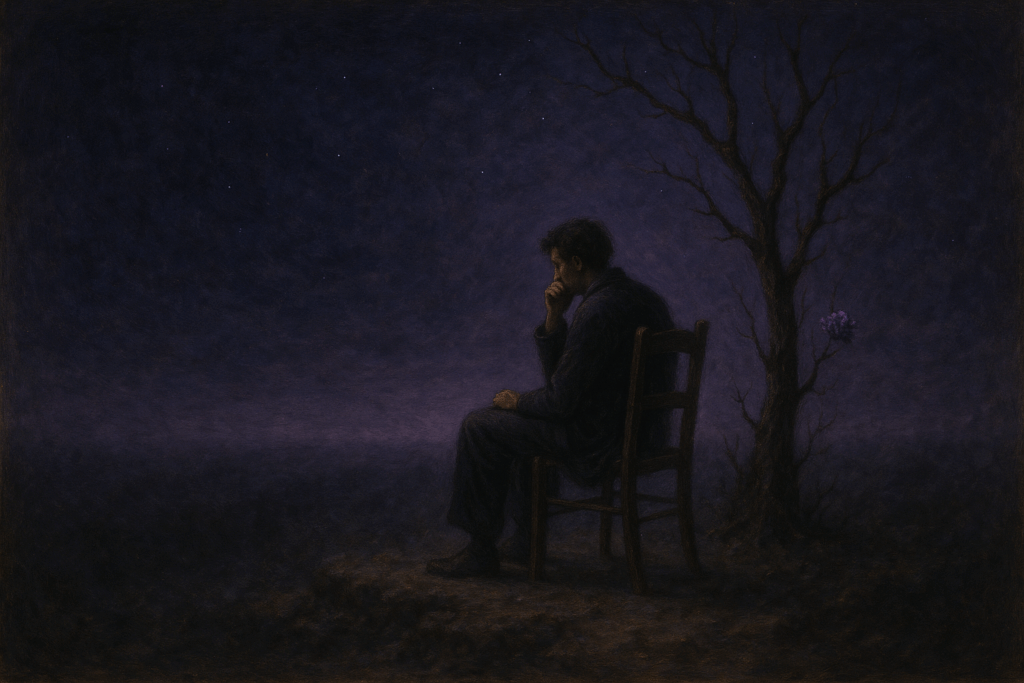
Not long ago, I went for a walk with someone I hadn’t seen in a while. We were out walking the dogs, just catching up, not a scene you would expect to spark anything profound. Yet somewhere between chasing sticks and untangling leashes, the conversation turned deep. We started talking about pain.

She mentioned how strange it is that when you’re in pain, it feels like it will never end, like it swallows up everything. But when it passes, it’s almost as if it never happened at all. I thought it was an interesting comment at the time, though admittedly it was difficult to fully grasp while being dragged along by two overexcited dogs, but her words stuck with me.

Later, I realized why. What she said was a mirror. I had been carrying my own version of that same truth: how, in the middle of hurt, it feels unbearable. Yet when things heal, even briefly, it’s as if the suffering was from another life. Like how you forget just how sick you felt once you’re healthy again. Or how meeting someone who once hurt you can feel warm and easy, almost erasing the memory of what went wrong.

That strange forgetfulness, it stayed with me. And it made me wonder what it really does to us. Why does it happen, and what can philosophy show us about living with it?


The Paradox of Now

Here’s the strange thing about pain and pleasure: each wants to convince us it’s the whole story. When you’re hurting, it feels like you’ve always been hurting, as if life was only ever leading up to this moment. When you’re happy, it feels like you’ve never really known despair, like the dark days were exaggerated—or maybe never even real.

You can see it on a collective scale too. After the pandemic, people returned to ‘normal’ so quickly that it almost seemed like lockdowns and isolation had happened in another life. The fear, the loss, the loneliness, it all seemed to fade the moment we could go back outside, hug friends, or book flights again. We forgot, not because it wasn’t real, but because the present has a way of crowding everything else out.

It’s not that our memory fails us. It’s that the present moment rewrites the script. Augustine noticed this way back in his Confessions. For him, the past, present, and future don’t exist on their own. They only exist in how we hold them in our awareness. And when that awareness is filled with pain, it colors everything, past and future included.

Psychologists today might call this mood-congruent memory. William James, never one to dance around things, put it more directly: “My experience is what I agree to attend to.” What you give your attention to becomes your reality. And when pain (or joy) takes all the attention, everything else slips out of sight.

That’s why every mood feels permanent—even though it never is.

“There are three times: a present of things past, a present of things present, and a present of things future.”

 

Remembering What Always Fades

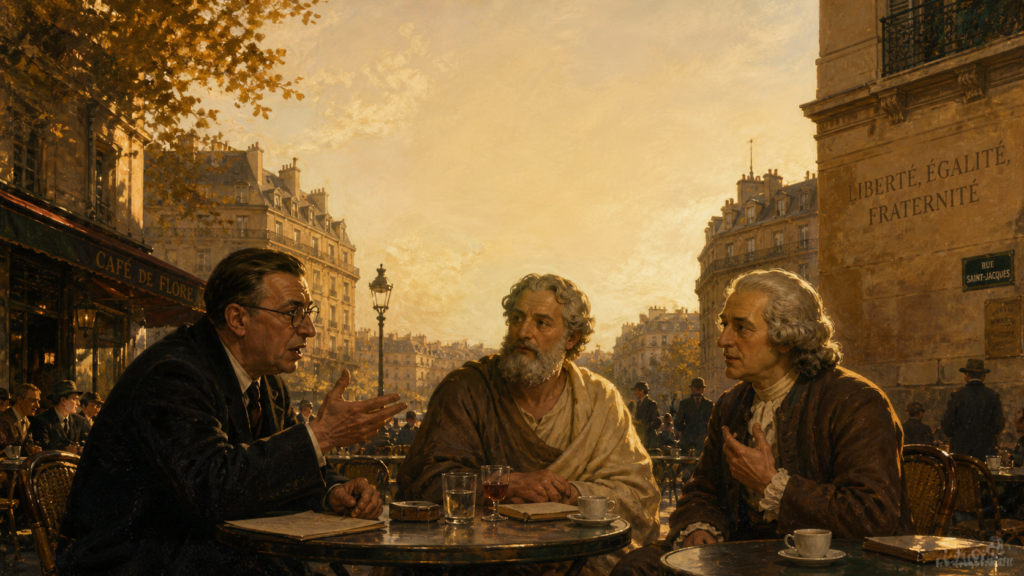
Philosophers across time noticed the same pattern we’re talking about, though each explained it differently.

For the Stoics, the problem was never the pain itself, but how quickly our judgment gets swallowed by it. Epictetus put it simply: “It’s not things that upset us, but our judgments about them.” Break a bone, lose a friend, miss out on something you wanted—each can feel like the whole story of your life has changed. But for the Stoics, that’s not reality, that’s perception. Their practice was to notice the distortion, to remind themselves that joy had existed before and could exist again, even when the present pain felt all-consuming.

One of the clearest tools they offered was this: create reminders that outlast moods. Marcus Aurelius wrote in his journal every day, not to impress anyone, but to anchor himself. A notebook, then, isn’t just reflection. It’s a way to leave messages to your future self. Proof that joy once existed, or that suffering once passed, even if today convinces you otherwise.

Buddhism makes the point in another way. Every feeling, good or bad, has a lifespan. It rises, peaks, and fades. The pain itself isn’t what multiplies our suffering, it’s the way we cling to it or resist it. We try to stretch out the good days, wishing they would last forever. We fight against the bad ones, wishing they had never come. But both moves ignore the truth staring us in the face: everything passes.

From that insight comes a practice: notice the rise and fall of feelings without clinging to them. You don’t need a monastery for this, just paying attention is enough. When pain shows up, name it: this is pain, and it will fade. When joy arrives, savor it without grasping at it. This small act of awareness loosens the grip of both extremes.

“Whatever has the nature of arising has the nature of ceasing.”

 

Finding Strength in the Cycle

Schopenhauer, in his famously bleak view, described life as a pendulum swinging endlessly between pain and boredom. Pain, he thought, comes from unmet desire. Boredom arrives the moment desire is satisfied. There’s no escape, just motion back and forth. It’s not exactly uplifting, but it does explain why our perception of happiness and suffering is so unstable. In Schopenhauer’s world, forgetting is less a flaw than a survival mechanism. If we carried the memory of every past frustration vividly into the present, existence would become unbearable.

And yet, even through his gloom, something useful remains. If life really does swing back and forth, then steadiness comes not from trying to stop the swing, but from accepting it. The point isn’t to carry every past hurt forward like baggage, but to allow forgetting to do its work. Letting go is not denial, it’s survival.

Camus saw the cycle differently. In his essay The Myth of Sisyphus, he retold the old Greek story of a man condemned by the gods to push a heavy boulder up a hill, only to have it roll back down, again and again, for eternity. For Camus, this wasn’t just a punishment, it was a metaphor for the human condition. Our struggles repeat, our efforts are never finished, and pain keeps returning no matter what we do. But instead of despair, Camus offers a challenge: to embrace the absurd repetition, to live fully even when life refuses to make sense. The forgetting that comes with each new push isn’t a weakness, it’s what makes the next attempt possible.

There’s something liberating in that. The stone will always roll back. Moods will always shift. Instead of waiting for life to finally make sense, the practice is to meet each climb as if it were new. Forgetting doesn’t make us weak, it gives us the space to begin again.

“The struggle itself toward the heights is enough to fill a man’s heart. One must imagine Sisyphus happy.”

 

The Wave and the Sea

That walk with the dogs was light and ordinary on the surface, but it reminded me of something simple: how easy it is to forget. Pain convinces us it will never leave. Joy convinces us it has always been here. Both are wrong.

I don’t think the goal is to beat that forgetfulness. I think it’s to notice it, and to keep living anyway. To remember for ourselves when memory bends. To let the good be good, without needing it to last forever. To let the hard days come and go, knowing they won’t stay.

Because beneath those waves, beneath the highs and lows, there is a deeper current, a sea that keeps carrying us forward. Maybe that’s what philosophy is trying to teach us: not how to stop the waves, but how to keep our footing while they rise and fall.

Loading Next Post...
Search
Loading

Signing-in 3 seconds...

Signing-up 3 seconds...